
Most business owners aren’t ready for transition.
We help leaders prepare before it costs them.
Don’t wait to plan.
As Benjamin Franklin so wisely said, “If you fail to plan, you plan to fail.”
→ Most exit plans don’t fail because of actual value, but rather waiting too long to plan and capitalize on the value windows.
→ Exit planning isn’t tomorrow’s problem; it’s today’s stewardship responsibility.
→ A business that depends on the owner is at risk, no matter how profitable it looks.
→ If a business can’t function without you, it can’t be transferred, sold, or sustained.
→ Finishing well is just as important as starting strong. Your legacy isn’t completed here; it’s just getting started.
We Help You Get Clear About:

Increased clarity about your timeline and pathway forward.
System optimization and replicable processes.
Minimized owner dependencies through efficiencies.
Strategic clarity with next steps and implementation planning.
Network with resources to help you plan effectively and transition smoothly.

Our packages are tailored to create the best solution for you.
What’s Keeping You Up At Night?
We’ve worked with several companies and brokers whose stories are far too common. We understand the nature of transition and the unknowns, but transferring ownership can be an emboldened calling too!
Your greatest legacy may not be what you’ve built, but what you do with the impact from the sale.
That value comes from planning well in advance of the valuation.
Here’s what you may experience as the owner preparing for and through transition.

It’s Normal to Experience:
Our Approach
Our approach leverages our proprietary 7Ps Framework™ along the way, but tailors it to the unique and complex needs of each owner and company in the transition process.
Phase 1: Foundation
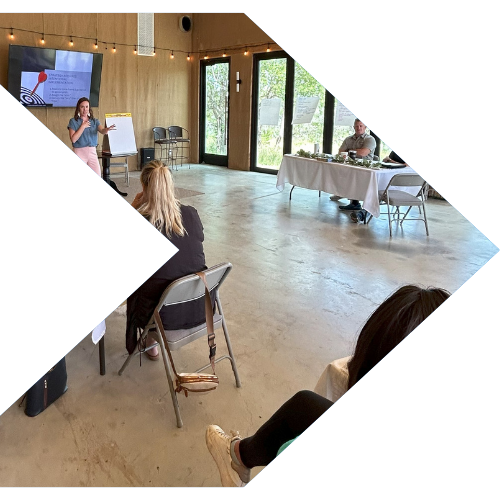
Focused on stabilizing the business to prepare for growth, valuation, and transition. In any stable framework, the foundation must be secure to build upon. In this phase, we focus on a gap analysis between where the organization is, where it needs to be at valuation, and the owner’s goals and timeline to maximize transition planning.

Phase 2: Bolster
Build the most attractive model. We’ll look at market trends and opportunities to boost your attractiveness to buyers. Through our comprehensive dashboard and built-in toolkit, you’ll gain access to a plethora of resources to engage and bolster the value of your company — without the demand to increased locations and employee demand. This is strategic planning at it’s best.
Phase 3: Transition
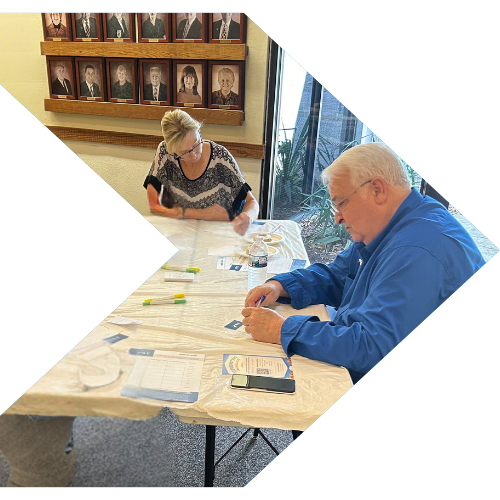
Creative and strategic in equal measure, we plan for the alignment, transition, and implementation of the company's future — and yours. This phase is a very intentionally crafted shift that prepares the company, culture, and beyond to extend the legacy of what you’ve built, and a targeted leader transition plan.
FAQ’s
Frequently Asked Questions
-
Business transition planning isn’t a reactive process; it’s a strategically proactive one.
Though not an extensive list, business valuation takes a holistic view of your business, observing aspects like:
Cash flow, revenue, and profitability
Company assets
Market benchmarks and competitive positioning
Transferrability and implementation logistics
Team and client stability
If your valuation reveals gaps in these areas, it can hinder your competitive advantage in the market and the sale.
But if you wait until you’re ready to sell, it’s too late. Time is leverage for positioning yourself for the best possible outcome.
That said, external factors can pose challenges in the market, such as interest rates and economic instability. So, differentiating yourself by bolstering your market position (phase 2 of our process) is crucial for transition readiness at the point of sale.
Take our Owner Readiness assessment to see if you’re ready for transition or start a strategic conversation.
-
If you’re waiting until you’re ready to sell to get clear on your goals and prepare for valuation, you’re behind the ball.
Between 70-80% of businesses don’t sell. The majority of causes aren’t quick fixes. That doesn’t mean they’re overly complicated, but time is leverage for a strong valuation.
The best timeframe for transition planning is to begin forming your team of most-trusted advisors (which is built into our services) 3-5 years before you’re ready to sell/exit.
If you’re naming a successor or family transition, 1-3 years is great.
-
Our packages range from one-year coaching and transition facilitation to a three-year fractional COO.
We tailor packages to your unique needs, so as we book a strategic conversation, we can better understand your timeline, goals, and opportunities between where you are and where you want to be when you sell to find the best solution for you.
-
We don’t profit from your valuation or sale like an M&A advisor. We’re not going to push tactics that aren’t aligned with your goals as the owner and the legacy you want to leave. But we have cultivated a trusted network that can help you with those steps.
We also understand that your operations and the foundation of your business play into both your sales and the integration into another company to minimize the bumps and bruises for your people.
That’s why we look for legacy-minded partners. We know the commitment it’s taken to build your business and the care you have for the people who have been in the trenches with you. It’s also why we choose to work with privately held companies. Your business isn’t just an asset to offload and sail off into retirement with a pocket full of cash (though we want to help you do that, too), it’s the legacy you’ve built that carries on.
-
We’re not about band-aid solutions. We take time to understand the unique complexities of your organization and collect data points to create the best strategy to move it forward, without the fluff. We want to get to the root of constraints to establish the best value and outcome for everyone moving forward.
We know you have a lot on your plate and mind — our aim is to be the partner who helps simplify the decision fatigue while increasing the value.
We’re ready to listen if you’re ready to start a strategic conversation to explore how our framework can help you.
-
Start a strategic conversation, and if we mutually discern a fit and the right timeline, we’ll follow up with an intake assessment to help us clarify your personal goals and the company's.
From there, we’ll schedule an (ideally in-person) follow-up conversation to begin tailoring your proposal for next steps.